
Which Crystals Can Go in Water? A Simple Crystal Care Guide
One of the questions I see most often is:
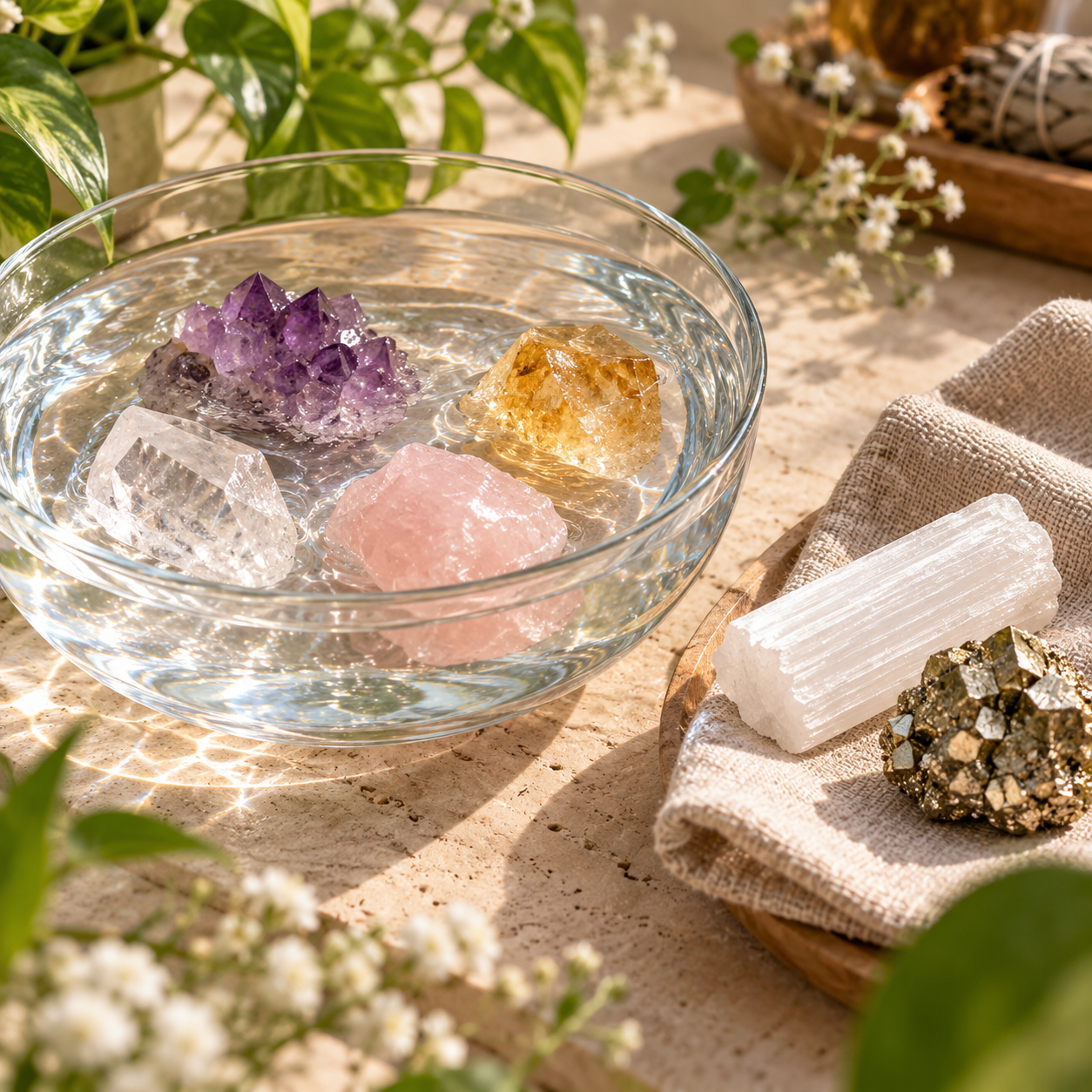
Can I put my crystal in water?
The answer is:sometimes — but not always.
Some crystals tolerate a quick rinse perfectly well, while others can be damaged by prolonged contact with water, moisture or repeated soaking.
And if your crystal is part of a bracelet or necklace, you also need to think about the elastic, thread, metal spacers and charms — not only the stone itself.
So before you rinse, soak, shower or swim with your crystals, here is a simple guide.

A Quick Rule Before You Start
If you are unsure what crystal you have, or whether it is water-safe, the safest option is:
Keep it dry.
You can always cleanse it using another method such as:
-
Palo Santo
-
Sage or smoke cleansing
-
Moonlight
-
Earth cleansing
-
Brown rice
There is no need to use water if you are uncertain.
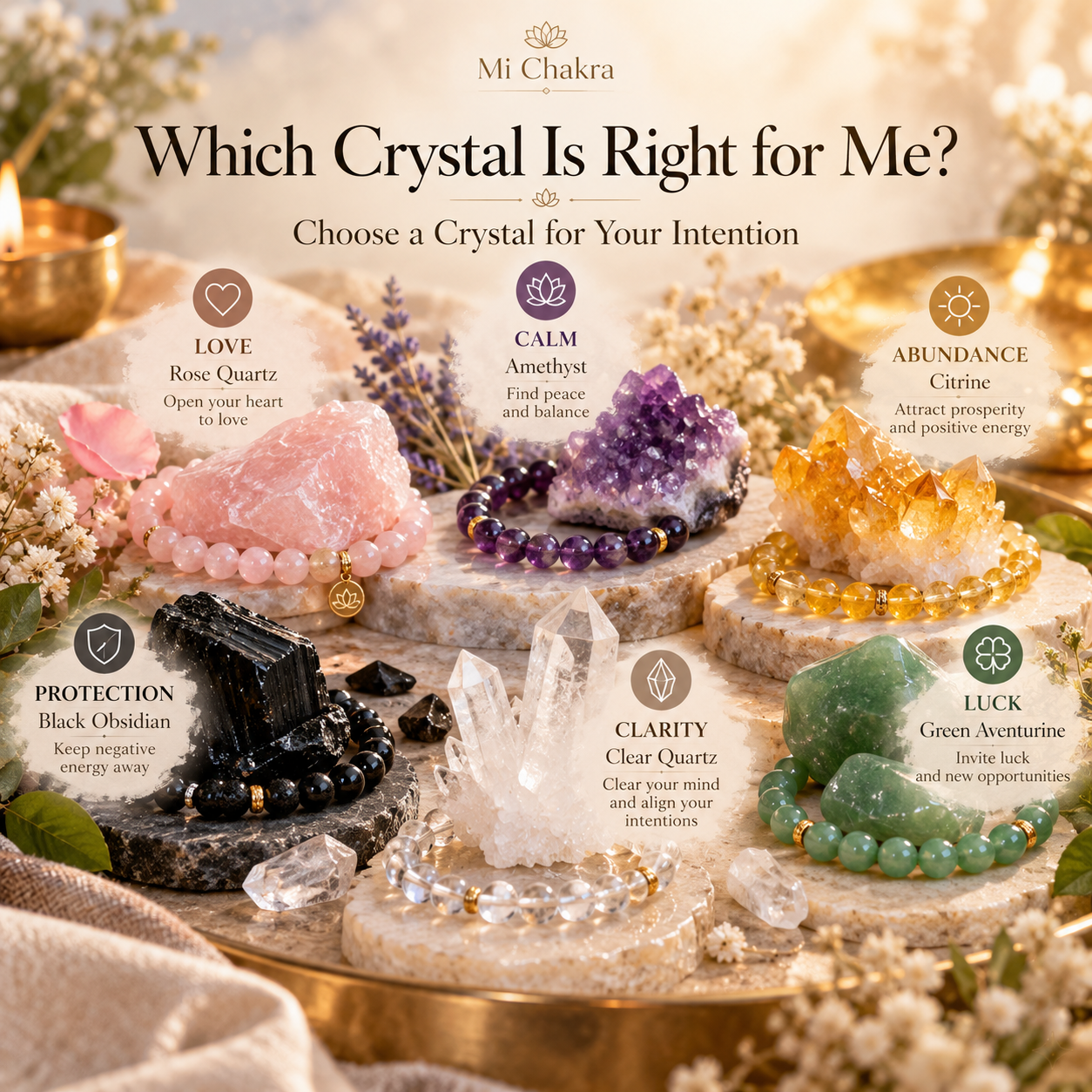
Can Amethyst Go in Water?
Generally, yes — for a quick rinse.
Amethyst is a variety of quartz and is reasonably durable for normal handling.
I would still avoid leaving it submerged for long periods, particularly if it is part of a bracelet or jewellery piece.
A quick rinse followed by drying with a soft cloth is usually enough.
Can Rose Quartz Go in Water?
Generally, yes.
Rose Quartz is also part of the quartz family and can usually tolerate brief contact with clean water.
Again, I prefer a quick rinse rather than soaking it overnight.
If you are cleaning a Rose Quartz bracelet, dry the elastic and metal components carefully afterwards.
Can Citrine Go in Water?
Usually, yes for brief rinsing.
Citrine is another quartz variety, so a short rinse in clean water is generally fine.
Avoid prolonged soaking, especially with jewellery.
Can Clear Quartz Go in Water?
Yes, Clear Quartz is generally one of the more water-friendly crystals.
A short rinse is usually fine.
Even with a durable crystal like Clear Quartz, I would still avoid regularly soaking crystal jewellery because the elastic, thread or metal components may wear faster.
Can Black Tourmaline Go in Water?
A brief rinse is usually fine, but I would avoid prolonged soaking.
Black Tourmaline can have natural fractures and rough surfaces where moisture may remain.
I personally prefer smoke cleansing, moonlight or another dry method for Black Tourmaline — especially when it is used in jewellery.
Can Moonstone Go in Water?
Yes, but handle it gently.
Moonstone can be cleaned with warm soapy water, but it is softer and less tough than quartz and can be damaged by knocks or sudden temperature changes.
For crystal jewellery, I would use only brief water contact and dry it carefully afterwards.
Can Labradorite Go in Water?
A quick rinse is generally fine, but I would not soak it.
Labradorite belongs to the feldspar family, like Moonstone, and should be treated with a little more care than harder quartz crystals.
Use a soft cloth and gentle cleaning rather than prolonged soaking.
Can Selenite Go in Water?
No — keep Selenite dry.
Selenite is a form of gypsum and is a much softer mineral.
Repeated or prolonged exposure to water can damage its surface.
For Selenite, choose a dry cleansing method such as smoke cleansing, moonlight or simply wiping it gently with a dry cloth.
Can Pyrite Go in Water?
I recommend keeping Pyrite dry.
Pyrite is an iron sulphide mineral and can oxidise in damp conditions.
Rather cleanse Pyrite using Palo Santo, sage, moonlight or another dry method.
Can Malachite Go in Water?
I prefer to keep Malachite dry.
Malachite is a copper carbonate mineral and is softer and more chemically sensitive than quartz.
A soft dry cloth or smoke cleansing is a better option for everyday crystal care.
Can I Shower With My Crystal Bracelet?
I generally recommendremoving crystal bracelets before showering.
Even if the stone itself tolerates water, regular exposure to:
-
hot water
-
soap
-
shampoo
-
body wash
-
chlorine
-
salt water
can affect the elastic, thread, metal spacers, charms and polished finish of the beads.
Taking your bracelet off before showering or swimming will usually help it last longer.
Can I Swim With My Crystal Bracelet?
I would avoid it.
Chlorinated swimming pools and salt water can both be harsh on jewellery components.
There is also the practical risk of elastic stretching or breaking while you are swimming.
What If I Don't Know What Crystal I Have?
If you are unsure, don't put it in water.
Choose one of the dry cleansing methods instead.
It is much easier to choose another cleansing ritual than to repair a crystal or piece of jewellery that has been damaged.
Water-Safe vs Keep-Dry Quick Guide
Usually suitable for a quick rinse:
Amethyst
Rose Quartz
Clear Quartz
Citrine
Moonstone
Labradorite
Black Tourmaline — brief contact only
Better kept dry:
Selenite
Pyrite
Malachite
And remember —water-safe doesn't necessarily mean soak-safe.
A short rinse and an overnight soak are two very different things.
You Don't Need Water to Cleanse Your Crystals
If you would rather avoid water entirely, that is perfectly fine.
Palo Santo, sage, smoke cleansing, moonlight and earth cleansing can all become part of your crystal-care ritual.
The method you choose should suit both the crystal and the way you personally like to work with it.
If you are unsure, always choose the gentler option.
Want to learn more?
Read my guide:
How to Cleanse, Recharge & Activate Your Crystals
where I explain Palo Santo, sage, moonlight, earth cleansing, running water, brown rice and how often you may want to cleanse your crystals.